
Negros Occidental is in the middle of a profound digital transformation. The province is now carving out a new identity as one of the Visayas’ most promising digital frontiers. From booming BPO corridors to improving internet connectivity in far-flung municipalities, internet usage is increasingly woven into the fabric of everyday life.
Examination of the overall internet usage in the province shows that urban centers surge ahead while rural communities still struggle with coverage gaps. There is an increasing need to look at who is online among over 2.68 million Negrenses, where access is strongest, how the internet is being used to support education and government services, and what barriers remain to be addressed.
Assessing Internet usage, accessibility
The 2024 National ICT Household Survey (NICTHS, PSA-DICT) found 48.8 percent of Philippine households had home internet access – up from 17.7 percent in 2019. Two in three Filipinos aged 10 and over actively used the internet.
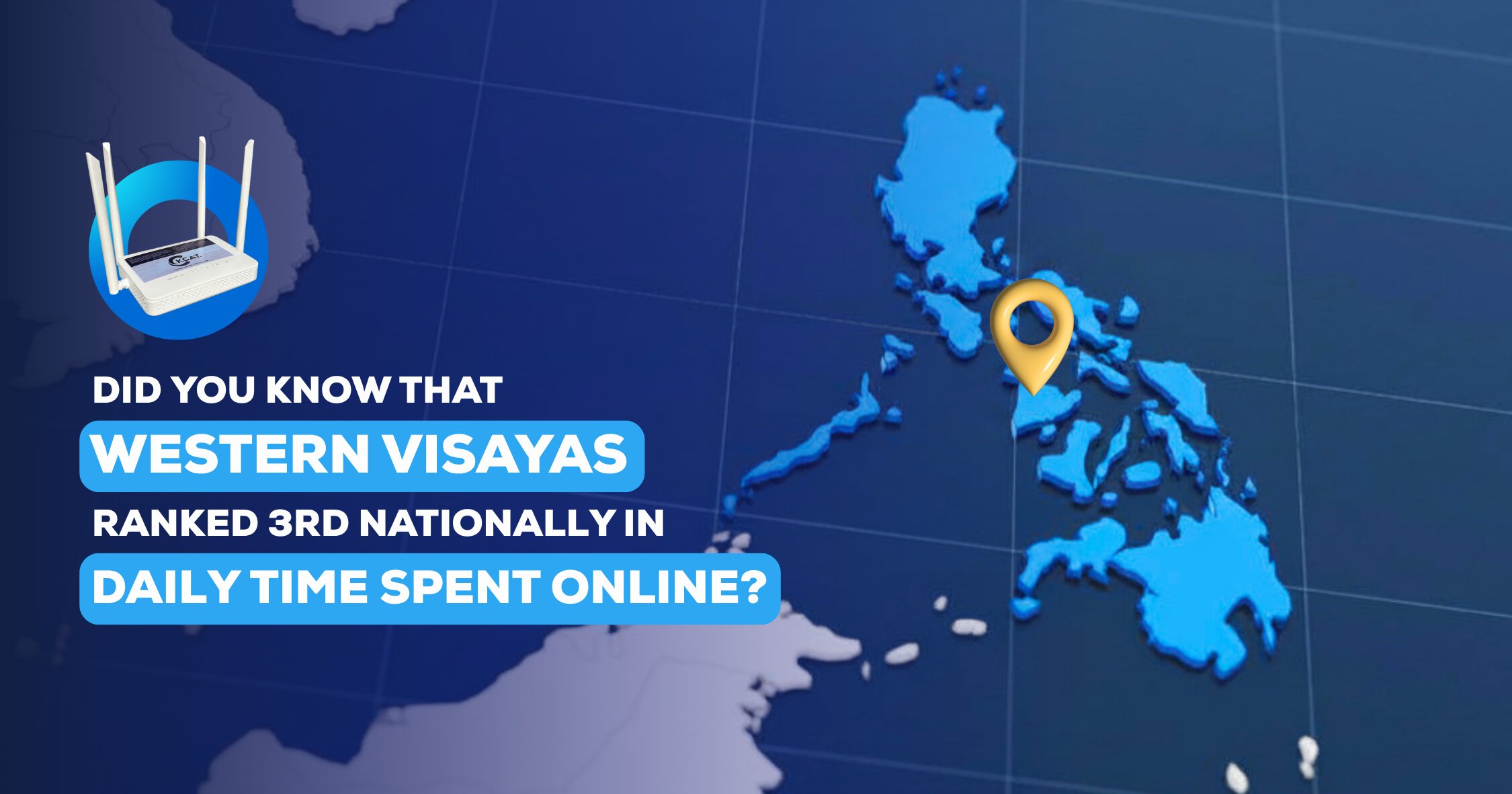
Western Visayas averaged 4.5 hours online daily, which is third highest nationally, with 98.8% of users accessing via mobile devices.
Bacolod City continues to be the province’s digital core with a booming BPO sector, employing over 40% of professionals. With PEZA-accredited location to service the offices, this is an industry that depends entirely on reliable connectivity.
San Carlos City stands out on community-level inclusion after building 17 DICT-recognized Tech4ED centers across its barangays in 2015. This is the highest of any LGU in Negros Occidental, reaching even upland communities with internet access and digital skills training.
Kabankalan, Cadiz, Himamaylan, and Sipalay serve as regional nodes. Alongside KCat’s support, each node is also equipped with DICT-activated VSAT satellite internet at their disaster response offices to maintain connectivity during calamities.

E-Learning & Digital Upskilling Adoption
Negros Occidental Language & Information Technology Center (NOLITC) has long been the province’s flagship digital learning institution.
Furthering the need for improved connectivity, it is recently expanding into the 2.5-hectare NOLITC Global Campus in Talisay City, making it a DICT Digital Transformation Center Level 3 facility with ICT labs, robotics, AI programs, and co-working spaces.
Overall province landscape now shows 118 Tech4ED and Digital Transformation Centers that deliver non-formal education and skills training, and backed by 74 DICT-conducted training sessions and 8 proficiency exams.
Digital literacy campaigns such as the ASEAN Foundation-backed ImFact Negros help further extend this reach to indigenous communities and rural students.
Digital Governance Improvement: eGovPH, eLGU, and SOCSERVE
The eGovPH Super App has 393,450 downloads in Negros Occidental alone. This gives residents access to government transactions without visiting physical offices.
According to the Philippine News Agency, 15 local government units (LGUs) are also operating on the eLGU platform for digital permitting and public service delivery. One example is San Carlos City who runs a homegrown system digitizing social assistance for senior citizens, solo parents, and PWDs called “SOCSERVE.”
Bettering Digital Infrastructure, Internet Connectivity
There are clear barriers to bettering digital infrastructure and internet connectivity with five municipalities who still lack free Wi-Fi, 17 LGUs that have not adopted eLGU, and the ?1,069/month national average internet cost.
Mountainous terrain makes last-mile fiber expensive in areas such as Don Salvador Benedicto, and digital literacy programs have yet to reach barangay communities at scale.
The reinstatement of the Negros Island Region (2024) and a new DICT regional office (June 2025) signal stronger institutional momentum. Service providers such as KCat also offer flexibility in their internet packages to hopefully close the remaining gaps in coverage, governance, and literacy.
As with nation building, community and private sector cooperation with government will determine whether the province’s digital transformation truly leaves no Negrense behind.